A dental office manager in Tucson receives an email offering “500 high-authority backlinks” for $99, with guaranteed first-page rankings in 30 days. Another vendor promises placement on “premium news sites.” The offers sound appealing, and she wonders whether they are worth trying.
Links from other websites remain one of many signals search engines consider. That demand has created a market for shortcuts, and some of them can do more harm than good.
What Google Says About Link Schemes
Google’s spam policies describe link schemes as attempts to manipulate rankings through links. Examples include buying or selling links that pass ranking credit, excessive link exchanges, large-scale article marketing with keyword-rich anchor text, and automated programs that create links.
Google can ignore manipulative links or take manual action against sites that use them. A manual action can reduce a site’s visibility until the owner cleans up the links and requests reconsideration.
Warning Signs in a Link Offer
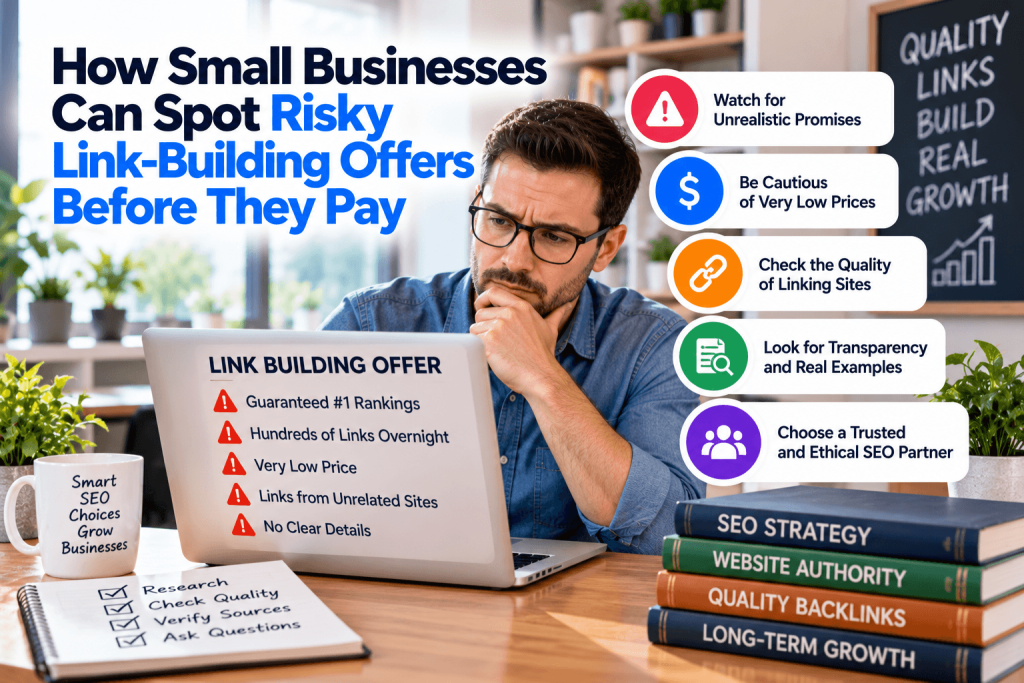
Be cautious of guaranteed rankings, since no one controls search results. Large numbers of links for a low price usually mean low-quality or automated placements. Offers that hide which sites will link to you, or that place links on networks of sites with no real audience, are red flags.
Watch for keyword-stuffed anchor text, links on unrelated foreign-language sites, and “permanent” placements on sites that exist only to sell links. Ask any vendor for examples of live placements and look at those sites as a reader would. Ask whether you can cancel and whether links disappear when you stop paying, since rented links are another warning sign worth noticing early on.
What Ethical Link Building Looks Like
Ethical approaches earn links through real relationships and useful content. Examples include local sponsorships with properly marked links, partnerships with suppliers, guest articles on relevant industry sites with genuine readers, and resources that others want to cite.
If you hire help, choose providers who explain their methods in plain terms and report exactly where links come from. Browsing the SEO, SMO and PPC category on Family Friendly Sites is one way to find local marketing providers to interview. Ask each one about link quality before signing, and confirm the details on their Family Friendly Sites listing match their website.
Choose Earned Links Over Shortcuts
Cheap link packages and guaranteed rankings often carry real risk. Learn Google’s link scheme policies, watch for warning signs, ask vendors for examples, and favor links earned through relationships and useful content. When hiring help, vet providers carefully, including those found in directories like Family Friendly Sites.
Frequently Asked Questions
Can buying links hurt my website?
Yes. Google's spam policies prohibit buying links that pass ranking credit. Google may ignore those links or take manual action against the site, which can reduce visibility. Paid placements are fine for advertising if they use rel="sponsored" or rel="nofollow" attributes. Ask vendors how they mark paid links.
What is a private blog network?
A private blog network, or PBN, is a group of websites created or controlled mainly to link to other sites and manipulate rankings. They often have thin content and no real audience. Google treats PBN links as a link scheme, so they carry risk.
How can I check where my backlinks come from?
Google Search Console shows a report of sites linking to yours. Third-party SEO tools provide more detail. Review the list for unfamiliar, low-quality, or unrelated sites, and ask any vendor you hired to explain the links they built. Keep records of what each vendor built.
Are directory listings considered link schemes?
Listings on relevant, legitimate directories that people actually use are generally fine. Problems arise with large-scale submissions to low-quality directories built only for links. Focus on directories that suit your business and keep listings accurate rather than chasing volume. Choose a few quality directories instead.
Keep reading

Website Trust Basics Every Property Manager and Real Estate Office Should Have
A renter in Orlando starts filling out a rental application on a property management website. Her browser shows a “Not secure” warning next to...
Read article
How Home Improvement Companies Can Build a Simple Customer Referral Program
A gutter and window company in Cincinnati notices that many new customers say, “My neighbor used you last fall.” Those referrals close quickly and...
Read article